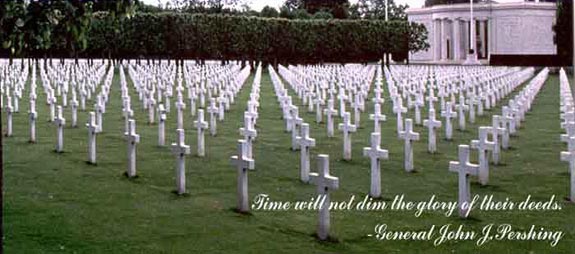













"Most people reading this have strong stomachs, so let me lay it out as baldly as I can: Much of what we loosely call the Western world will not survive this century, and much of it will effectively disappear within our lifetimes, including many if not most Western European countries."
The Singularity Is Near portrays what life will be like after this event— a human- machine civilization where our experiences shift from real reality to virtual reality and where our intelligence becomes nonbiological and trillions of times more powerful. In practical terms, this means that human aging and pollution will be reversed; world hunger will be solved; our bodies and environment transformed by nanotechnology to overcome the limitations of biology, including death; and virtually any physical product can be created from information alone. The Singularity Is Near also considers the social and philosophical ramifications of these changes, and is certain to be one of the most widely discussed and provocative books of 2005.
This [computing] power increase, combined with the predicted growth of nanotechnology—robots the size of red blood cells inserted into the body—will make possible, within two decades, complete scanning of the human brain. By then, computer hardware should be capable of running accurate software models of human intelligence. By the end of the 2020s, computers will pass the Turing Test, simulating a living person well enough to fool an interrogator. At that point, Kurzweil believes, a genuine synthesis of the strengths of human and machine intelligence becomes possible: pattern recognition and inference on the human side, large memory with instant recall and easy data-sharing on the machine side.
Freed from the built-in limitations of the brain, machine intelligence will then be able to use nanotechnological design to far exceed human intelligence. But at the same time, nanotechnological implants can be used to augment human brains, creating a hybrid intelligence unlike anything previously known. Ultimately, Kurzweil predicts, the predominant component of human intelligence will be non-biological, and more of our experiences will take place in virtual reality than in the physical world. Human-machine intelligence will saturate the immediate vicinity of the Earth, and eventually grow to fill the universe. Kurzweil backs his predictions with numerous citations of other experts, and while some of the arguments are dense, the book repays close attention.
Access Denied
Either you are not currently logged in, or you do not have access to this tab page within the portal. Please contact the portal administrator to obtain access.

Acess (sic) to New Orleans is controlled by the National Guard and local5. What did they do with all that money they received?
authorities and while we are in constant contact with them, we simply cannot
enter New Orleans against their orders.
Army's engineers spent millions on Louisiana projects labeled as pork
Ivan exposes flaws in N.O.'s disaster plans
05:09 PM CDT on Sunday,
September 19, 2004.
A Perfect Storm of Lawlessness
In December of 1995, the Orleans Levee Board, the local government entity that oversees the levees and floodgates designed to protect New Orleans and the surrounding areas from rising waters, bragged in a supplement to the Times-Picayune newspaper about federal money received to protect the region from hurricanes.10. Why did the city fail to take advantage of what Amtrak says was its offer to take a couple hundred passengers on its last train out of New Orleans?
"In the past four years, the Orleans Levee Board has built up its arsenal. The additional defenses are so critical that Levee Commissioners marched into Congress and brought back almost $60 million to help pay for protection," the pamphlet declared. "The most ambitious flood-fighting plan in generations was drafted. An unprecedented $140 million building campaign launched 41
Scientists have long forecast the appearance of an influenza virus capable of infecting 40 percent of the world's human population and killing unimaginable numbers.Preventing this catastrophic outcome will requires months of preparation and planning. Are we prepared? Read more here or here.
The havoc such a disease could wreak is commonly compared to the devastation of the 1918-19 Spanish flu, which killed 50 million people in 18 months. But avian flu is far more dangerous. It kills 100 percent of the domesticated chickens it infects, and among humans the disease is also lethal
An H5N1 avian influenza that is transmittable from human to human could be even more devastating: assuming a mortality rate of 20 percent and 80 million illnesses, the United States could be looking at 16 million deaths and unimaginable economic costs. This extreme outcome is a worst-case scenario; it assumes failure to produce an effective vaccine rapidly enough to make a difference and a virus that remains impervious to some antiflu drugs. But the 207,000 reckoning is clearly a conservative guess.

P.J. O'ROURKE writes today about the mass transit fiasco.
There are just two problems with mass transit. Nobody uses it, and it costs like hell. Only 4% of Americans take public transportation to work. Even in cities they don't do it. Less than 25% of commuters in the New York metropolitan area use public transportation. Elsewhere it's far less--9.5% in San Francisco-Oakland-San Jose, 1.8% in Dallas-Fort Worth. As for total travel in urban parts of America--all the comings and goings for work, school, shopping, etc.--1.7 % of those trips are made on mass transit.
Then there is the cost, which is--obviously--$52 billion. Less obviously, there's all the money spent locally keeping local mass transit systems operating. The Heritage Foundation says, "There isn't a single light rail transit system in America in which fares paid by the passengers cover the cost of their own rides." Heritage cites the Minneapolis "Hiawatha" light rail line, soon to be completed with $107 million from the transportation bill. Heritage estimates that the total expense for each ride on the Hiawatha will be $19. Commuting to work will cost $8,550 a year. If the commuter is earning minimum wage, this leaves about $1,000 a year for food, shelter and clothing. Or, if the city picks up the tab, it could have leased a BMW X-5 SUV for the commuter at about the same price.
We have a light rail TROLLEY being constructed in the Phoenix area. Here are some of the FACTS that the developers do not want anyone to know:
1. TROLLEY transit is 40 TIMES the cost of road transit! The tax cost per person mile of travel via roads is $0.06. The tax cost for light rail is $2.75. This shows that when the quantity of service is taken into consideration, moving a person via light rail costs 40 times as much in taxes as moving a person by road. The costs are as reported by MAG, Valley Metro and ADOT.
2. The Valley Metro Section 5309 report shows quite clearly in table V-2 on page V-3 that the incremental cost of the new start light rail system is $12.49 per passenger trip. This figure is arrived at by posing a baseline case without light rail that has a cost and ridership projection. Then light rail is added and the added cost and added number of transit riders are projected. The added cost ($105,889,931 per year) divided by the added riders (8,475,748 per year) = $12.49.
3. Pollution INCREASES with the ‘mass’ transit TROLLEY system! Valley Metro’s environmental impact statement shows that adding light rail will increase the number of hours automobiles spend in traffic. This means more engines running more hours, burning more fuel and emitting more pollution (see table S-9 on page S-18).
4. The TROLLEY also is projected to increase pedestrian, rider and vehicle accidents due to the rail line route in existing streets.
5. When you lay the tracks and the inevitable shifts in neighborhoods and demographics occur, the tracks must then be removed, or left unused. Then new tracks must be laid, if the system has not gone bankrupt in the interim. Bus routes can be changed on a moments notice.
6. Proponents of the TROLLEY insist expansion will be determined by the SUCCESS of the initial segments. However, they NEVER specify precisely what the SUCCESS criteria are.
This is definitely a case where the money trail needs to be followed.